
Too Bluff to Be True
– Rishika Badhe
TY BSc. Economics (2023-27)
Estimated reading time ~ 6 min
I am crazy good at Bluff; you know, the card game. No, the gods haven’t blessed me with the perfect poker face since birth. It just took me 12 years (and counting) of learning Bharatanatyam. Believe me, in the end, this will make sense.
Before that, allow me to bore you with the theory of dance. Bharatanatyam can be divided into mainly three, but not limited, components: Natya, Nritya, and Nritta. Nritta is pure dance, which focuses on technical proficiency and the sharpness of movements. Nritya is a confluence of Nritta and expressions; this includes not only rhythmic movements but also acting out characters from a story. And finally, Natya, to put it simply, is a dance-drama of sorts with expressions stealing the spotlight.
Now Nritta can be relatively easily mastered. It is the expressions, or Abhinaya as it is commonly referred to, that take years of training, and hearing “I have no interest in seeing your mundane faces” from your teacher for your lack of expression. It can be best described as a staircase with no last step; there are innumerable ways and limitless possibilities to portray the same scene every time a dancer decides to take the stage in their hands.
Abhinaya is an essential part of any performance and leaves a lasting effect on the audience. Speaking as a dancer, and occasionally a member of the audience, Abhinaya paves its way to the inner minds of the audience, allowing everyone to feel the same way the character is feeling. It creates a pocket of air in the auditorium where, along with oxygen, you have the audience reeling in the emotion the dancer conveys.
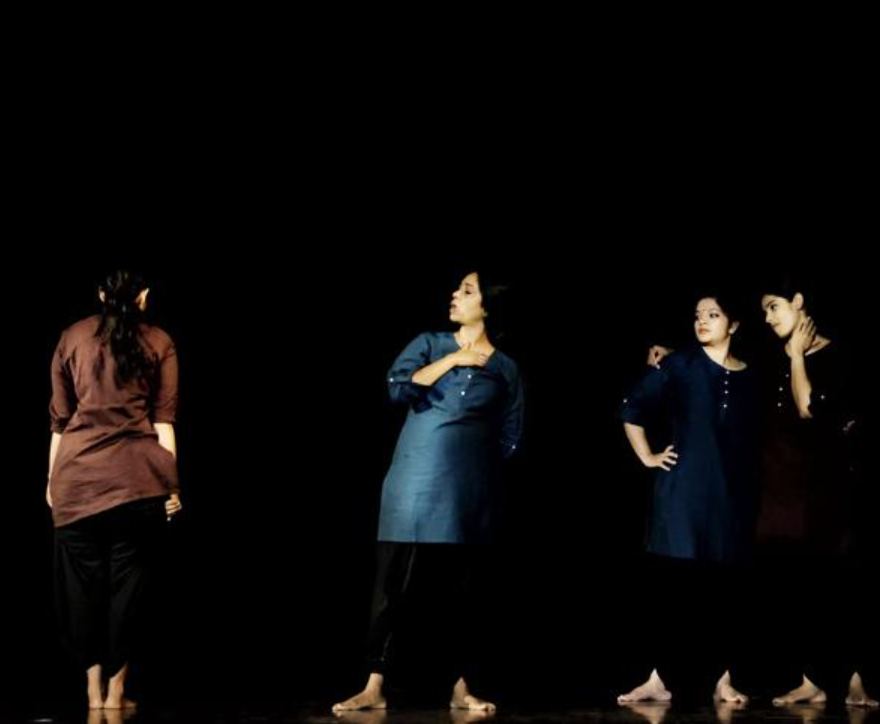
The best example of this is a Bharatanatyam performance with a modern twist I went to watch over a year ago, christened as “And She Spoke.” It depicts the struggles and joys of being a woman in today’s age; needless to say, it handles very sensitive issues. The way the dancers put forth the underlying theme while balancing a touch of humor still remains engraved in my brain, leaving me with goosebumps to this day. The end depicts the brutal reality of rape, but also goes to show the power of women standing together in solidarity.
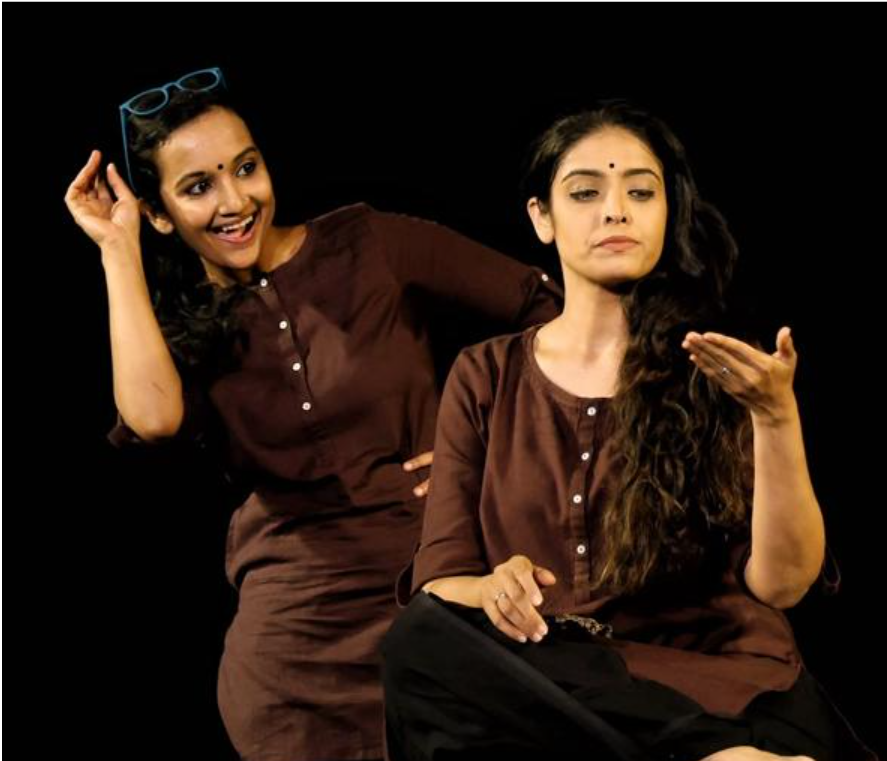
Naturally, it is no walk in the park to ensure that every single person in the audience grasps the brevity of the situation and is moved by it on a personal level. Absolutely immersing oneself in the character is pretty much the stepping stone for effective portrayal of Abhinaya. However, when the character is a victim of rape, it gets a bit heavy on behalf of the dancer. A blanket of silence engulfs the audience as it is left to ponder about what they have just witnessed. I recall just sitting there, all of us collectively, for about two to three minutes after the performance ended, letting the harsh reality remind us what a pain it simply is to be a woman. Ultimately, that is the end goal of Abhinaya.
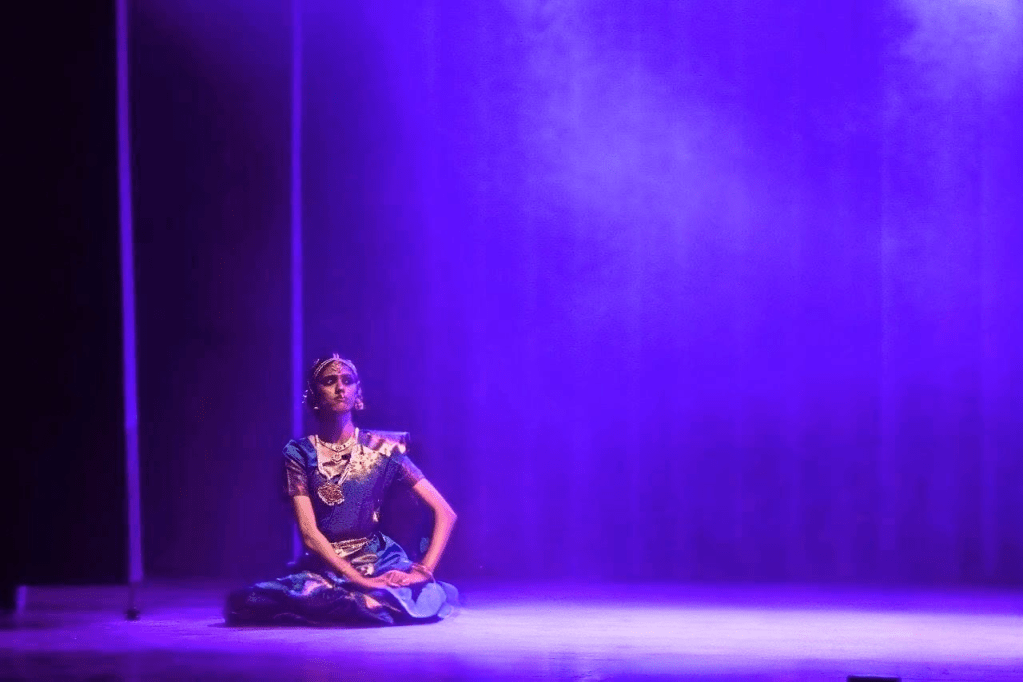
To talk about the pieces I have learned and performed, I have portrayed a wide array of characters. My forever-favourite piece is called Era Rara, and it falls under the wider category of Javali. It is purely Abhinaya-based and offers no scope for Nritta or dance movements per se. To elicit the meaning of the composition in one sentence, it showcases a love-stricken woman calling for her lover, who refuses to embrace her or approach her. I find it so joyful to play a character like her because for a few minutes, I get to be an enamored and a heart-eyed girl who just wants to be close to someone she holds dear. It allows me to be lost in a world where I am in control and gives me a much-needed break from reality.
Any villain I get to play is also always fun. Not always do I get to think ‘today is a good day to cause trouble for everyone else,’ and actually get to implement it. It is a joy in itself to widen your eyes and flash a wicked, evil smile. Were I to do this outside, I would be flagged as a psychopath.
“What is all this supposed to do with Bluff?” The answer to this much-awaited question will be my parting gift to you. To master the poker face you just need to be effective in two out of four types of Abhinaya. There is Aangika Abhinaya, Vachika Abhinaya, Aaharya Abhinaya, and Sattvika Abhinaya. “Aangika” is the form of expression using the body and thus physical movements as the sole instrument of expression. “Vachika” utilises songs, dialogues, or any form of speech for that matter, to express ideas, songs, thoughts or feelings. “Aaharya” pertains to expression through costumes, make-up, and jewelry. And finally, “Sattva” describes the state of being overwhelmed by others’ emotions such that one’s feelings take over oneself. When this is translated into Abhinaya, it is called Sattvika Abhinaya. However, we are more concerned with Aangika Abhinaya and Vachika Abhinaya. Make eye contact, do not fidget, and keep your chin up; exude confidence that speaks nothing but assertiveness in your body language. This is Aangika Abhinaya at its peak. “Tu uthake toh dekh,” “pick up the card if you think I’m lying,” are some convincing dialogues you can use. However, do use this as per your discretion. This is Vachika Abhinaya. Onstage, you notice a collaboration between the singers and dancers; they weave their voices and movements together to form a wonderful amalgamation of the different types of Abhinaya. Bluff is, however, a one-man show in this case; you have to be the singer and the dancer yourself. Feel free to throw in a “Why would I lie?” with a shrug, furrowed brows, and doe eyes for maximum impact.
There is a little artist in each and every one of us waiting to be let out. Whether it is singing while driving or gossiping with your friends, there emerges a sneak peek of the skill of Abhinaya. It is the subtle nuances that deliver the most engaging performance, such as a “you wouldn’t believe what he said,” with an aggregated and exasperated facial expression with raised eyebrows. In the end, whether it’s a game of Bluff or performing on the stage, expressions are a way of effectively conveying your message with an impression worth remembering.