Emotions vs. Rationality
Riya Raheja, Anwesha Ghosh
TY B.Sc. (2023-2027)
Estimated Reading time: 6 minutes
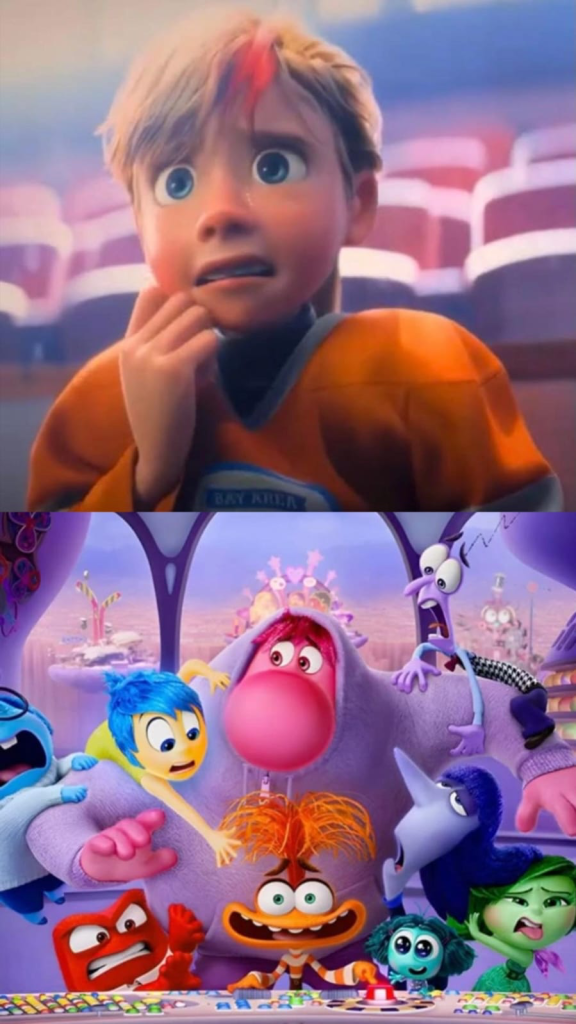
In Inside Out, Riley’s mind operates like a control room where Joy, Anger, Sadness, Fear, and Disgust vie for the steering wheel. When all is calm – when her head isn’t clouded by any cognitive bias – the console remains quiet, balanced, almost rational. But the moment distress hits, Anger slams the controls, narrowing Riley’s world to one burning mission of revenge. The shift from being completely relaxed and in control to words slipping out before you even realise why they’ve formed is something which can be very intriguing.
That’s the Hot-Cold Empathy Gap, a concept coined by behavioral economist George Loewenstein in the late 1990s.
An experiment performed by Dr. Gwen Dewar and Loewenstein was when they asked a couple of students how much they would pay to dip their bare hands in the ice-cold water. The people who had just experienced the pain bid the highest amount because it’s fresh and feels painful. But the students who had never tried it couldn’t imagine the pain and hence bid the lowest. The point is, we often exaggerate how bad it will always feel. If we’re comfortable, we underestimate how bad suffering can be.
Loewenstein became intrigued by how people make decisions when emotions or physical states take over. He noticed the same thing with hunger. Participants who were surveyed on a full stomach made all sorts of confident promises about eating less or skipping snacks. Yet, when they were actually hungry, their choices shifted dramatically suddenly, resisting temptation didn’t seem so easy.
These experiments led Loewenstein to coin the term Hot-Cold Empathy Gap: the simple but powerful idea that our rational, level-headed selves can’t accurately imagine how our emotional, “hot” states will shape what we actually do. It explains everything from overeating to overspending, and why “future you” is far less reliable than you think.
We often underestimate the extent to which our instincts and strong emotions can influence how we act when we’re in a hot state, compared to the rationality we maintain in a cooler state.
Humans often overestimate how effectively they will use their cognitive resources while underestimating the influence of visceral factors such as hunger, pain, fear, or arousal. Our cognitive ability to foresee or predict the future is inherently limited, and this becomes even more difficult when imagining ourselves in a state different from the one we are currently in.
When we are calm, composed, and rational, we tend to overestimate our capacity to act logically if faced with strong gut feelings. This leads to a systematic misjudgment of our own future behavior, which is what behavioral scientists call the hot-cold empathy gap.
Let’s understand this through a Hot vs. Cold: The Two Sides of Decision-Making

This triangle essentially illustrates how our brains act when reasoning and emotion clash. You have your visceral state on one side: are you cool and collected or agitated and sensitive? Conversely, is your cognitive system causing you to make rash decisions or to carefully consider each option?
Hot state and our System 1 ( In the upper red corner):
This is the “I don’t care, I need it now!” attitude. Raw emotions like excitement, hunger, rage, and desire influence decisions. When you’re starving at a buffet, it’s not about controlling portion sizes; instead, it’s about storing food like you’re preparing for the winter. This is perfectly captured in Inside Out when Anger takes over Riley’s control panel.
System 1 and the Cold State(bottom left):
You’re still on autopilot but at ease here. You don’t think deeply, but you’re also not sentimental. Just like when you buy your regular toothpaste without comparing brands, or when you open Instagram without realising. It’s automatic, almost like muscle memory.
System 2 and Cold State (the blue corner at the bottom right):
This is the “grown-up” zone: cool, deliberate, slow thinking. When deciding whether to invest or save your internship stipend, or before signing any paperwork, you carefully compare loan rates. Although there is at least some logic to this, it feels like anxiety is overplanning and creating charts in Inside Out 2.
And here’s our eureka moment: when we’re in a cold state, we can switch between both System 1 and System 2 – automatic or deliberate. But when we’re in a hot state, System 2 basically goes offline. Strong emotions push us into instinctive System 1 thinking, which is why the triangle cuts off the top right corner.
That’s the brilliance of this model. It shows that no matter how smart or rational we think we are, our emotional “hot” states simply don’t allow for calm, logical System 2 reasoning. This is why the cool you overestimates what the “future you” is going to be.
Sometimes, even in a cool state, we end up making choices that spiral into panic, disgust, or regret. Think of your friend who says, “Just one puff won’t hurt,” only to find himself hooked and reaching for nicotine to calm his cravings. Or take a lighter example: you tell yourself you’ll watch just one episode of The Summer I Turned Pretty before bed. Next thing you know, it’s 3 AM, you’re on season two, episode seven, desperately trying to figure out which brother is unlucky enough to end up with her. This is a cognitive bias known as the cold-to-hot empathy gap occurs when persons in a logical, “cold” state fail to recognize the significant impact that “hot” emotional or physiological states, such as hunger, pain, or intense cravings, will have on their future preferences and behavior.
One key psychological explanation for this bias lies in context-dependent memory. Humans recall and imagine events more accurately when they are in the same physical or emotional state in which those events originally occurred. In other words, when we are calm, we have limited access to memories and mental simulations of how it feels to be hungry, afraid, or in pain, making it difficult to predict our reactions under those conditions.
The roots of this bias may stretch back to our evolutionary past. Since the time of hunter-gatherers, human survival has depended on rapid responses to immediate threats and opportunities, an instinct often described as “survival of the fittest.” While the link to the hot-cold empathy gap is indirect, the underlying mechanism is similar: the brain tends to overcorrect toward satisfying immediate needs rather than waiting for long-term benefits.Isn’t that how sustainable development came into play in the first place? Like in a hot state, this makes us short-term optimizers, prioritizing immediate relief or reward even at the expense of future outcomes. Imagine being on a strict diet as you walk past a bakery and the sight of pastries with cherry toppings and sizzling syrup tempts you; your brain prioritizes the immediate pleasure over the distant benefit of sticking to the diet.
This affects relationships as well. It impairs our ability to think rationally. When you’re in a cold state, you might fail to empathize with your partner and how the statements made by you are perceived by them in a hot state. This leads to a gap, a miscommunication between the two individuals in the relationship.
This phenomenon even questions the idea that people are often risk-averse and would rather avoid losses than chase similar rewards. The brain’s natural caution is overruled when one feels hot, particularly when one is experiencing strong emotions or peer pressure, for example- gambling. The apparent risk of losing is outweighed by the immediate need to win acceptance, feel a rush, or get away from suffering. In these situations, people might take risks they wouldn’t typically take, sometimes risking everything they have, only to come to regret the choice when they’re cool and in a more rational state. Moreover, this is also the reason why people may end up engaging in panic selling, which they would not have considered in a cold state.
Our hot states cannot be totally suppressed, and if we could, life would be boring. However, we may learn to identify them and accept that sometimes there will never be complete agreement between our “hot” and “cold” selves, because the smartest decisions are mostly felt through, but we should not justify our actions using the hot-cold state.
Life is not black and white, and decisions aren’t always simply right or wrong. That’s precisely why the controversy over whether Ross and Rachel were “on a break” still lingers. Sometimes, it is justified to lose control of your emotions and truly feel every bit of them when situations become heated and emotions start to boil over. The trouble arises when those emotions become too intense or are mismatched to the situation, narrowing our focus to the immediate moment and blocking out the bigger picture, such as the years of commitment you have invested in the relationship. Just remember that life is wildly unpredictable and you never know which freak outs and dramatic moments will take you to places you could’ve never imagined.