
YES, I DON’T SUPPORT THE LGBT COMMUNITY
Rudraneel Sinha
FY B.SC. Economics
Estimated reading time: 5 minutes
Let me begin with clarifying one thing: when I say I’m against the LGBT community, I mean the Lockheed, General Dynamics, Boeing, and Texas Instruments one, and not the queer folks. Clickbaited you guys well, didn’t I?
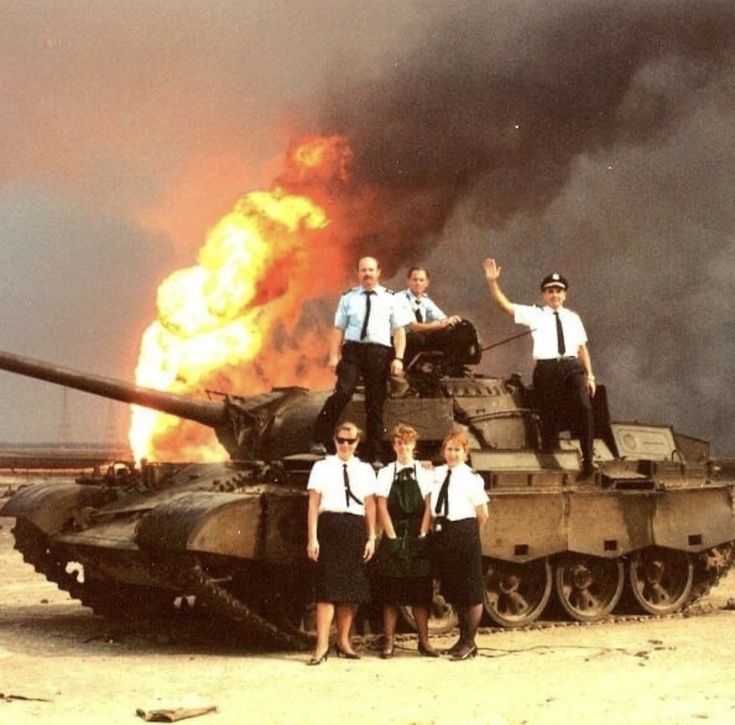
In his farewell address in 1961, President Dwight D. Eisenhower, in his exact words, gave a stark warning: “In the councils of government, we must guard against the acquisition of unwarranted influence, whether sought or unsought, by the military-industrial complex. The potential for the disastrous rise of misplaced power exists and will persist.”
He feared that the very machinery built to defend democracy could one day feed upon it and that war could evolve into a full-fledged business model. Six decades have gone by, and today his “prophecy” stands fulfilled. The Military-Industrial Complex has evolved into a colossal, trillion-dollar economic ecosystem – an unethical & shadowy empire whose prosperity seems destined to be fueled by the continuation of global conflicts rather than the pursuit of peace.
But what is the Military-Industrial Complex?
Simply put, it is basically a close relationship between a country’s military, government, and defense industry, where these groups work together to influence policy and economic priorities.
Now, let me be very honest, while conflicts might arise over differences in borders or ideologies, they are prolonged and scaled by money. Big companies like Lockheed Martin, Raytheon, and Boeing have been nicknamed Merchants Of Death as their main business relies on prolonging conflicts for their own economic gain. This so-called ‘empire’ is very well embedded in the American establishment, stretching from the battlefield to the boardroom, from the Pentagon to Wall Street. Lobbyists silently whisper in congressional ears, retired generals sit on corporate boards, and taxpayer money flows into private hands under the cover of “national security.”
For the Fiscal year 2024, the US spent approximately $997 billion on its defense sector, as per SIPRI. Yes, you’ve heard that right $997 billion, which is nearly 37% of all global military expenditure, while the top American arms firms earned over $300 billion combined. Every missile launched, every crisis prolonged, and every new budget increase make the profits of these arm firms skyrocket, but behind every number lies a grim truth: where every dollar gained is tied to a life lost, to cities reduced to rubble, and families displaced. The MIC has skillfully, over the years, mastered the art of turning human suffering into its own economic growth.
The economics of the MIC are not at all based on traditional free market principles, but on what I believe operates as a powerful interconnected Cabal, which is a closed loop of influence and dependency between the defense industry (the sellers), the Pentagon (the buyer), and the U.S. Congress (the financiers). This system has become a dominant force in the U.S. economy, one that profits from instability and directly shapes foreign policy.
The Oligopoly That Owns American Security.
The MIC, which includes the ‘merchants of death’ such as Lockheed Martin, Northrop Grumman, Boeing, Texas Instruments, and Raytheon, is essentially a huge oligopoly, which is basically a market dominated by a few sellers who have decimated any competition. This is a classic move that has been executed by these firms ever since their inception. And this isn’t just some random claim that I’m making, this is very well discussed in The Military-Industrial Complex: A Market Structure Analysis” published in the American Economic Review in 1972, by the economist William Adams who described the entire U.S. defense sector as a “classic oligopoly,” which is marked by high concentration ratios, extreme barriers to entry, and close interdependence between firms and government institutions. He strongly argued that the industry’s structure “reflects not the instruments of free enterprise but the institutional symbiosis of government and industry.”He understood 50 years ago that the MIC doesn’t at all operate by the rules of open competition but operates by the shadowy guidelines of power, access, and exclusivity.
To bombard you with more information, according to the Stockholm International Peace Research Institute (SIPRI), a leading independent think tank tracking global arms sales in found that the top 100 arms-producing firms had generated about $632 billion in arms sales in 2023 out of which US firms accounted for almost 50% of the total sales, which is roughly about $318 billion. Ain’t this mindblowing?
This, along with SIPRI’s comprehensive arms industry database, confirms that this market concentration creates barriers to entry that ultimately prevent newer competition from entering the playing field. Companies have to innovate, push for efficiency, and reduce prices to survive in the ruthless environment that is a competitive market, but when it’s the companies themselves controlling the majority of the markets with virtually no competition, they don’t have any incentive to push for any of the aforementioned efforts. Instead, these smarty pants raise the cost of their product, knowing that the government will have no other places to shop from, thus creating a dilemma for the US government. This is what economists like to call monopolistic pricing power, which is the ability to set prices above what they would be in a competitive market. This is also one of the reasons why newer companies find it difficult to survive, as they don’t have the same experience, specialized facilities, and that sweet, sweet government backing that the bigger arms companies have.
Let me tell you the important part, this market structure not only yields high profits but also makes use of the political power to boost revenue because when growth by efficiency fails, then you most certainly require increased government spending for self-preservation. And that’s exactly where the political economy comes in the broader picture.
How Money Buys Power
Now this is where the oligopoly’s market power translates into political corruption. The Military-Industrial Complex (MIC) leverages its oligopolistic market power to promote regulatory capture, where defense firms shape their own oversight. To give you more insights about this political corruption over the past decade, contractors spent well over $1.3 billion on lobbying, including $157 million in 2024 alone ($381,000 daily), funded by profits from market dominance as per Open Secrets. In my mind’s eye, it almost seems like the MIC uses the dark arts to repackage corruption as a fancier, more likable version of itself—lobbying.
A recent 2024 report by the Quincy Institute really pulled back the curtain on the Secretary of Defense Executive Fellows (SDEF) program, revealing it as essentially a revolving door for lobbying. I genuinely want you to think about it: that between 1995 and 2021, over 315 senior military officers as high-ranking as a colonel or a rear admiral were given solid jobs right inside defense giants like Boeing, Raytheon, and Lockheed Martin. It’s no surprise that these companies spent about $830 million lobbying the Defense Department during that time, clearly leveraging the insider knowledge those officers brought with them.
Now this is a very classic example of information asymmetry, wherein contractors gain superior expertise from ex-officials who now work for these big fat corporations. And I should definitely tell you that, according to the Project on Government Oversight (POGO), at least 380+ Department of Defense officials and military officers shifted to the private sector, with almost 90% becoming registered lobbyists, and a quarter of them went to work for the Department of Defense’s top five contractors.
To enlighten all the readers, the most dangerous aspect of this political economy corruption is that it is completely legal. Any person with basic common sense would have understood that this is, in fact, unethical, but in the land of America, this is how they ball. Big defense contractors can legally lobby members of Congress into passing laws in the interest of such companies, and these politicians get enough funding to sustain their political campaigns as well as their entire careers and to be brutally honest, there is nothing technically corrupt about any of this, mainly because it is just the natural outcome of allowing concentrated market power to buy political influence. And it is that exact political influence that directly enables flawed incentive structures to make war profitable.
As the LGBT community prolongs wars, maybe you won’t mind the prolonged wait for the article expanding specifically on this 🙂
When Peace Becomes Bad for Business
Have you ever heard of persuasive incentives or misaligned incentives? These economic concepts essentially mean that personal profit motives directly contradict social welfare, and this is exactly how the MIC operates. Thomas Palley, in the Post-Keynesian Economics Society working papers, explicitly said that the MIC represents a system where the profit-making activities of defense contractors have become integrated with the defense planning activities of the US government. He also argued that this creates a “Military Keynesian” economy, which I strongly believe, because defence spending simply screws up the economic activity towards military spending.
The tiresome incentive proves to be entirely too simplistic, in the sense that if peace were to break out, it would cut the demand for weapons, which in turn would collapse the entire economic system. Since this is bad for business, the system will always work towards maintaining prolonged conflicts, exaggerated threats, and ceaseless wars. Take the wars in Ukraine and Gaza, where peace could have been easily achieved, but because these conflicts were so profitable, the MIC actively sought to sell weapons to both parties in the respective conflicts. This is further proved by the record sales of arms exports in 2023, which stood at $238 billion, which can be easily traced back to the conflicts in Ukraine and Gaza. Every missile fired in Ukraine boosts their earnings, every bomb dropped in Gaza increases their stock prices, and every American weapon used results in an economic win for the MIC. This ultimately created what economists call a ‘positive feedback loop’, where, in this case, global instability directly increased the shareholder returns and earnings per share of the big arms corporations.
In normal markets, every company makes a profit by solving problems, but in the case of the MIC, companies profit by prolonging conflicts in the world. For them, peace is catastrophic for business because if there are no conflicts, then there is no demand for their products. This oligopolistic market structure of the MIC, combined with the political economy capture, has created a system where corporate profits are literally dependent on human suffering, and this flawed incentive structure slowly but steadily falls into local economies through weaponized economic dependency.
Work, War, Repeat
To explain how labor economics with respect to the MIC in the US works, let me explain it by giving a very good example of the F-35 fighter jet program. This program generates an estimated $72 billion in annual economic impact and supports over 290,000 jobs across 45 states with more than 1,900 suppliers. This is nutty as a fruitcake because this program alone has employed so many individuals for at least a decade or so, but you might be thinking: Isn’t this good for the economy, because of its positive economic impact? The answer is quite the opposite because, as per the research from the “Institute for Policy Studies,” the National Priorities Project by IPP clearly shows that the average taxpayer in America spends $1,087 per year on weapons contractors compared to $270 for K-12(primary and secondary school system) education, and only $6 for renewable energy.
What the F-35 program showcases is called ‘Keynesian multiplier effects’, which simply means that initial government expenditure generates additional economic activity through supply chains. But this is lowkey a scam, because when the government can spend billions on weapons contracts and create the same amount of jobs, they can definitely spend on building hospitals, schools, solar farms, and critical infrastructure to create that same multiplier effect. These sly foxes have somehow convinced the folks in Congress that spending money on them is much more important than spending that money on some other sectors that most certainly need that money.
But the most suspicious thing of them all is how the MIC has exploited this through something called ‘path dependency’, which in this case, means communities depend on weapons manufacturing for employment, and then become locked into supporting military expansion, regardless of actual national security needs. This becomes a need for economic survival for the workers. Crucially, these jobs are distributed across the country through 1,900 suppliers, making the F-35 funding a nationally distributed issue rather than concentrated in a few districts.
This geographic move is a well-engineered one and a straight-up political power move right out of a textbook, and according to the research from FIU in the journal “Class, Race and Corporate Power, it states that this geographic distribution of military spending creates political power in the sense that senators from Congress are disproportionately tied to the military sector, mainly through campaign contributions or through districts that are heavily dependent on military spending.
This again leads to concentrated benefits and diffused costs. The benefits (290,000 jobs, 1,900 suppliers, billions in contracts) are concentrated in specific congressional districts and companies, making them politically powerful and defensible. The costs (opportunity costs, lost civilian investment, international instability, the human toll of perpetual war) are diffused across all Americans and the global community, making them politically invisible and defensible. No politician can say, “Guys, I’m eliminating 290,000 jobs to invest in education.” It’s bonkers and political suicide. But that’s exactly what the system is designed to achieve, as it uses local economic dependency as a political cover for flawed national security policy.
This isn’t just any other system, but it’s a deeply troubling cycle. The immense power of the few in the oligopoly doesn’t just influence politics; it captures it. This capture then poisons the incentives, making it tragically rewarding to drag out conflicts. And the cruelest part? These toxic incentives intertwine a web of economic reliance in local communities. Think of the workers, good people, who feel they have to vote to protect those defense contracts because their family’s future depends on it. Their representatives who know this are compelled to defend those jobs. Meanwhile, the contractors cynically use this very local economic dependency as a perfect shield for their lobbying. Simply put, it’s more like an Ouroboros, creating a self-perpetuating and unavoidable system that ambushes all within its mechanism.
WHEN CHAOS IS PROFITABLE
Connecting all of them together, shows how the MIC, in a very immoral way, has exploited the system for its own economic gains. Their greed for those sweet, sweet profits is very evident in their actions, as it is clearly shown where their priorities lie, but the worst and pathetic part of this situation is that every single person, right from the ones building the weapons to the ones selling them, is involved in this inefficient and terrible system. The MIC profits from conducting the most unethical shenanigans a company could ever do, and the most famous of them is prolonging conflicts. For them, peace isn’t an option because it doesn’t pay dividends; conflicts do, and by opposing peace, these guys fill up their pot like leprechauns. In my image, if the MIC were a person, it would definitely be that “finance bro” wearing a Patagonia vest who would say that instability is just another market opportunity for growth.
What the MIC has done and achieved is exactly what Eisenhower warned us about. The shadowy operations of the MIC aren’t just any conspiracy theories that are being spread by a crackhead. It is backed by irrefutable evidence that proves all the involvement and workings of the parties involved. As Frank Zappa once quoted, “Politics is the entertainment division of the military industrial complex”. Bring peace into this, and all the dominoes will fall, one by one, piece by piece, until it has fully collapsed, but until then, it is and will remain an unshakable empire.
Until we meet again………..
This is literally capitalism and nothing else. This is how capitalism is supposed to work. The bourgeoisie controls (lobbying) the ruling political class to further their class interests. For example, contrary to popular belief it is not israel that controls the ruling class of America(which is validating an antisemitic belief in itself) but, the MIC that controls the ruling political class. It is in the direct interest of these giants to use the democratic institutions that have been established to further their interests. What is the interest? Profit. It’s is not the american people that decide their representatives but the MIC.
I hope the contradictions in capitalism do come to fruition because if there is anything that I have learned from reading history, nothing lasts forever.
There will come a time when people turn their eyes on the real enemy, The Military Industrial Complex.
Communist bootlicker 🙂
Such wise words at this tender age, we have a firestarter. Would love to hear more, keep going brother.