
“The first rule of Fight Club is, you do not talk about Fight Club’’
Rudraneel Sinha
BSc. Economics (2025-29)
Estimated reading time ~ 5-6 minutes
“Just let go,” is one of the lines Tyler Durden says to the narrator. He speaks of another aspect of self-destruction where he basically asks the narrator to let go of his fears so that he can fully lock the hell in to achieve his goals. Similarly, I would also like to ask you to let go of whatever is holding you back so that you’re able to focus on what I’m going to yap about – so lock in gang, we’re going on a rollercoaster ride. Fight Club has to be one of my top ten films of all time, not because everyone loves the concept of the film or from the corny and cringe Instagram edits on alpha and beta male crap that was, and sadly is, floating all over the internet, but mainly because you can watch it and be at the edge of your seats while having chole bhature or you can watch it when your girl dumps you or when you’re suffering from an unholy amount of dysentery. This movie will never disappoint you, and that’s what makes it a masterpiece. But keeping the jokes aside, there is another reason why I love Fight Club, which is because of the underlying art within it.
The film accurately depicts the rot within society and shows how Tyler Durden wants to undermine and challenge the established norms, authority, and prevailing cultural ideologies. This is what is called ‘subversive art’, which the movie clearly has in it. Knowingly or unknowingly, I believe this is one of the other key reasons why this movie has such a huge cult following and why the majority of men like this film, and the reason why men love Fight Club is very simple, as it touches on some key topics. The movie directly addresses things like how masculinity is in decline because of society, and how men chasing consumerism leads to them losing their purpose in life. It also talks about men not achieving their dreams and goals, as Tyler says, “We’re the middle children of history, man. No purpose or place. We have no Great War. No Great Depression. Our Great War’s a spiritual war; our Great Depression is our lives,” which clearly indicates how men have no purpose and meaning as well as no ambition due to society. Such topics that are discussed in this film are loved and adored by men because it presents what is actually happening in this world. It leads men to feel relatable to such characters which movies like Taxi Driver, Drive, Nightcrawler, and Fight Club, which have often shown such protagonists who are trying to achieve their goals. Such ‘literally me’ characters are often liked by men.

You might be thinking, what is subversive art? Well, as I mentioned above, it is simply challenging society’s established norms by disrupting expectations, questioning authority, and revealing hidden truths. Art often reinterprets familiar forms, such as cartoons, or employs unexpected materials to provoke thought and inspire change in social or political structures. This type of art challenges the status quo, encouraging viewers to see the world from a different perspective, as demonstrated in the films of Amos Vogel or Joyce Pensato’s darker interpretations of Disney characters. In the case of Amos Vogel, this well-respected film expert often said that movies should be made messily. He argues that traditional movies that make people comfortable is in fact, a trap, and because of this, he believes that a movie should try to disorient the audience, should force you (the audience) to figure things out by critical thinking, and should openly highlight the uncomfortable truth that mainstream films refuse to show. All of his philosophy can be clearly seen in the film ‘A Movie’ (1958) by Bruce Corner. As for Joyce Pensato, she used subversive art very precisely to target the most celebrated and loved characters in American culture, such as Mickey Mouse & Homer Simpson, and ripped out the joyfulness and made them angry and more real. What she did was she took away their commercial polish. By removing the things that made the audience more comfortable and happy, the audience now has to look at the stress and paranoia of the modern world.
Fight Club is possibly one of the prime examples of how subversive art has been used by David Fincher to showcase his artistic magic. The film is not just any other ‘rebellious’ movie; it structurally dismantles the values of the viewers. The movie follows how the insomniac narrator is trying to fit into society’s expectations, as well as trying to be someone in this pathetic and disgusting world. And that is where Tyler comes in, who is basically an alter ego of the narrator and who the narrator aspires to become. Furthermore, this movie structurally breaks the expectations of the audience through its subversive nature. This is easy to explain when you watch the movie carefully. The movie has almost everything to make it a Hollywood blockbuster – it imitates a high-end budget, sexy cars, huge explosions, yada yada yada, and last but not least, the ultimate sex symbol of the 90’s, Brad Pitt. It has everything, like everything, but, but, but it does it at an ironic distance because it shows how it utilizes all these rad things to tell you (the viewers) how shallow and how dangerous these things really are. It simply mimics the very thing it hates to expose them. This is clearly shown in the movie, as it portrays Tyler Durden as a cool, intelligent, and charismatic individual who delivers thought-provoking speeches and leads viewers to believe in his philosophy and his ultimate plan, ‘Project Mayhem’. But it shows you how dangerous and radical his plan actually is. This is where subversiveness comes into play. At the end, the audience realizes that all this time they were cheering for a fascist who wears a dope leather jacket. They understand that they were all deceived, and this deception is the mechanism of subversion that forces you to know how a charismatic person can easily manipulate you. The plot is just one of the elements that make it a work of art. The second element is the visuals and cinematography by Jeff Cronenweth.
Fight Club doesn’t just convey its story through its script; it also uses colour and lighting to portray what it wants to show the audience. The use of colour and lighting has been maximized to highlight the film’s overall subversive nature. The majority of the movie is filmed in desaturated colours, mainly grays, blue, and sickly green. This is not done on purpose to make it more stylish, but to give the corporate scenes an overall dead look, or the basement scenes in the movie, where the fights take place, where warm colours are used, especially red, to showcase how the characters feel alive at that moment. Red is the colour of passion and blood, contrasting with the cold blue of the corporate world. We can also discuss the visual shots of the IKEA scene, where, by superimposing prices and descriptions over the furniture, the film treats the narrator’s life as a webpage, visually reducing a home to a shopping list. Another way the visual aesthetic is used in this film is by often hiding faces in deep shadows with low-key lighting. This visual aesthetic effectively supports the film’s subversive nature by conveying that identity is unstable: when you can’t see a character’s eyes, you simply cannot trust them. Keeping the narrator and Tyler in the shadows prepares the audience for the upcoming twist that they are the same person. It ultimately suggests that in modern society, we don’t even know our own faces. The entire film uses visual grammar to present how cold and warm the world of Fight Club really is, because if it looked like a bright sitcom-like movie, then the overall message wouldn’t land. David Fincher uses these visual tactics as his nuke to attack your comfort.
While visual grammar is an important element that makes it a subversive masterpiece, the element that makes it more subversive is how Tyler sells soaps. Blud literally sells soap made out of human waste from liposuction clinics. Wild, isn’t it? Tyler shows the middle finger to the consumer world by doing these types of shenanigans. This is further explained when people are expected to undergo fat removal because society wants them to be thin and beautiful. Take Kylie and Kendall Jenner, for example. If you look at their pictures before they had all that plastic surgery, you will realise how beautiful they actually are, but because of society’s mindset of perfection, they might have taken this route. That might be one of the reasons why they did all that, but that, my friends, isn’t the point. The point is how Tyler, in his own words, “selling their fat asses back to them,” where he literally goes and sells soaps made out of human waste to the rich. He implies that capitalism has slowly processed and harvested people’s insecurities back to them as solutions. This is just one of the subversive parts using soap; the other is all about making bombs out of it. Tyler uses the soap-making byproduct, glycerin, to make nitroglycerin. In other words, this man makes explosives from the leftovers of the rich to blow up the banks, which is his ultimate goal. This also suggests how the system itself contains the seeds of its own destruction. This might sound fictitious to all of you, but no cap, there has been an instance of an artist selling soap made by human waste back in 2019. Now here’s the point gang – Fight Club wasn’t trying to be edgy or imaginative; it has consistently predicted how capitalism has systematically monetized anything and everything, even our own bodies. The funny thing is, the film takes a physical object (soap) and uses it to tell a complex story about economics, surgery, and terrorism. It forces viewers to be utterly disgusted by a ‘clean’ object, subverting the very idea of what soap is supposed to be.

Enough soap, let’s talk about the most serious thing that this movie wants to show the audience, and that is the decline in masculinity. Fight Club portrays that part very well from the beginning, showing how the narrator is less of a man. The narrator is emasculated by corporate life, insomnia, and his absorption in consumer identity. He is humiliated and looked down upon by his superiors, who make him feel less of a man, and that’s where our man Tyler Durden comes into the equation. He acts as an extraordinary, sexy, masculine, and charismatic individual whom the narrator looks up to. Tyler is everything that the narrator isn’t. He has balls, and I mean huge balls, but here’s the flaw that exists. Tyler promises liberation to everyone who joins him, but folks, it is a trick and a pretty good one indeed. His followers start leaving their boring jobs to become space monkeys or something. They traded a blue tie for a blue uniform and a corporate boss for a hyper-masculine, sexy cult leader. The film here subverts the idea that manliness and violence will set you free, but what it does is it shows how hyper-masculinity often leads to fascism, where you lose your identity even more than you did at your office job. This hyper-masculinity is often found within leaders like Trump and Putin. According to a study by Nitasha Kaul on ‘The Misogyny of Authoritarians in Contemporary Democracies,’ shows that hyper-masculine leaders (Trump, Putin, Erdogan) often weaponize misogyny as an explicit political strategy to consolidate fascist-adjacent authoritarian power.
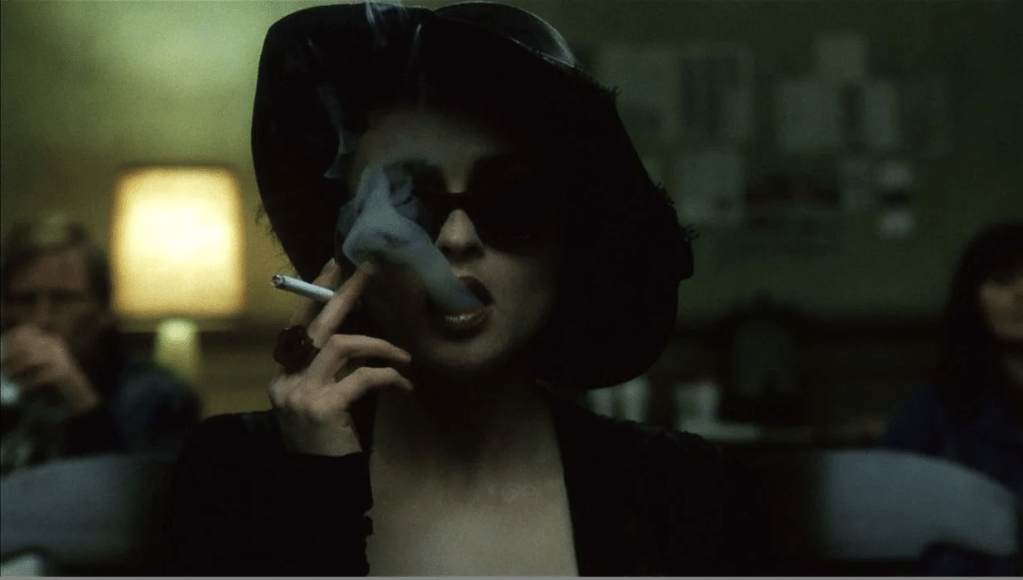
Now back to the main point, you might be thinking this entire film is about two men yapping and doing tomfoolery, but hold up, that ain’t true. What most people don’t understand is that Marla, the female character in the movie, also plays a significant role and represents the film’s final subversion of masculine identity itself. At first, she is badly treated by the narrator and Tyler, but she acts as the road to salvation. The end of the film shows how the narrator lets go of his corporate identity and also the hypermasculine nihilism. The narrator acknowledges that he is indeed a flawed person. What it has is an acknowledgement by the main character that he must integrate his shadow (Tyler) while accepting Marla. The narrator is being choked by both his boring corporate life and Tyler Durden, which makes his life hell. Due to all of this, he confesses to Marla that “I’m sick,” and this confession marks the demise of his dual delusion of chasing consumerism and the macho rebellion, which he understands was not the solution. Unlike other movies, where there is a return to order or where patriarchal authority is restored, there is none of that going on here. Here, it is instead shown how the narrator is a wounded and apologetic person who feels comfort with Marla. As I said, Marla is the main dawg, unlike Tyler, she ain’t no projection but a real person. She has reached rock bottom by herself and exits outside all their shenanigans. She collapses the narrator’s delusions through her presence, and when the narrator rescues Marla and apologizes to her, the film shows the possibility of redemption not in another grand gesture of destruction, but in recognition of harm and the willingness to relate to another as an equal subject. Because of her feminine as well as masculine energy, Tyler can’t categorize her. For him, she is a glitch. For him, she is his Kryptonite. Marla can see through the act, which Tyler can’t handle, and when the narrator apologizes, only then does he let go of Tyler and embraces being a real man because he did the most manly thing ever by admitting that he is flawed and wants to be with her because when things go haywire, he isn’t someone who has achieved or conquered something but he’s just a guy who’s holding a woman’s hand and has accepted that he’s stupid. This is how Marla plays an important role in subverting the film’s idea of masculinity.

One thing I definitely like about this film is how they use political obscurity as a subversive strategy. It refuses to declare whether anarchism or fascism ultimately prevails, and David Fincher uses this as a very effective subversive strategy. Many critics argue that it endorses fascism because of Tyler Durden’s use of violence. Others say that the film intentionally shows how anarchism can be infiltrated and corrupted by charismatic leaders. This debate is not a weakness in the film’s subversive message; it is actually the main point. The politics of the film can always be discussed and dissected by viewers and critics, but Fight Club is essentially a mix of ideas that leaves the audience to think for themselves and find answers.
What makes Fight Club a masterpiece in subversive art is all the tactics David Fincher and gang use. The entire plot is a masterpiece, people, and I will never stop milking out the idea that Fight Club is cinema’s best film that has ever come out. This film constantly deceives the viewers and sometimes endorses radical ideas to prove a point. The film is subversive not because it presents an alternative to late capitalism or patriarchal masculinity, but because it reveals the internal contradictions of these systems and their inevitable move toward dystopia. Another reason why this film is a masterpiece is that it achieves a subversive critique while remaining entirely within the logic of spectacular cinema. Every time you rewatch it, you’ll find something new to learn from it. Every second of this film goes hard and makes you question your own thoughts. It will manipulate you, persuade you, and deceive you into cheering for a hot, sexy, muscular fascist, and the elements that it incorporates within the film to make it into a subversive piece of art are mind-blowing. If this ain’t art, I don’t know what is then.