
The Sambar Paradigm
Agamjyot Kaur
BSc Economics (2024-28)
Estimated Reading time: 3-5 minutes
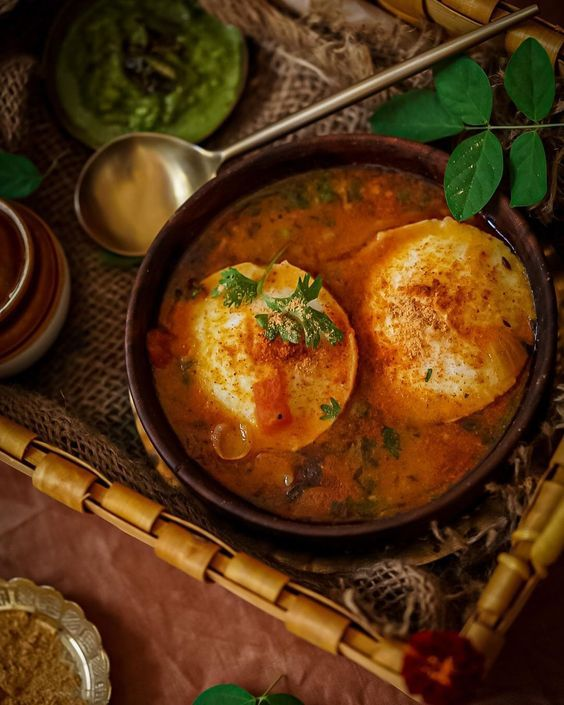
Sambar is not just a warm, comforting bowl of stew. It is the main character, the Shah Rukh Khan of the South Indian plate, wooing rice as the romantic lead, effortlessly slipping into the role of the loyal supporting friend for idli and dosa, and occasionally so wholesome and crowd-pulling that it doesn’t need a cast at all to make the show go housefull.
Have you ever wondered why restaurants continue to offer unlimited refills of Sambar? This isn’t the generosity of one restaurant; it’s a neighbourhood-wide expectation. No rule forces it, yet deviation is costly. If a restaurant decides to stop serving it, the customers will notice. In fact, some may even be disappointed! A restaurant in Buxar was ordered to pay Rs 3,500 to a customer after it failed to serve Sambhar with its Special Masala Dosa worth Rs 140. The court noted that not serving Sambhar with dosa caused the customer “mental, physical, and economic” suffering. Dramatic? Maybe. Justified? Absolutely.
All restaurants face a dilemma: either follow the same path as other restaurants and offer unlimited refills, or break the chain reaction by charging for every refill of Sambar. The choice a restaurant makes in such a scenario is the result of Strategic Interdependence. The benefit of providing refills depends on whether neighbouring restaurants do the same. When everyone offers unlimited Sambar, customers expect it, and withdrawing this service becomes costly. When no one offers it, charging is safe. Each restaurant’s optimal strategy is therefore shaped by the anticipated actions of others.
This follows the famed ‘Stag Hunt’ model in game theory. The entire event hinges on coordination and trust, where individuals choose between a low pay-off safe game situation or take a risk for a high pay-off, which only succeeds if none of them is a heartbreaker. In game theory terms, the ‘unlimited Sambar’ custom looks less like pure competition and more like a coordination game with two possible worlds, one where restaurants coordinate, and another where everyone settles for a lower-payoff option of charging for it.
Each player’s optimal choice whether to offer or rely on unlimited Sambar depends entirely on their expectations about how others will behave. There are 2 consequences to this setting: either a high-trust equilibrium is achieved where the restaurant offers unlimited Sambar, expecting the diners will respond by ordering fuller meals and keep coming back, or both players settle at a lower payoff when no one meets the expectations.
Now, why is this risky? In stag hunt terms, the stag is big but can only be captured if both players cooperate.
Although game theory is pretty solid with its real-life implications, the real question is, how does the south indian survive outside this model? While conventional restaurants typically deal with a 10% to 20% net profit margin, South Indian restaurants receive the lion’s share, mainly due to two primary reasons: inexpensive raw materials and all-day demand. Since the South Indian cuisine is primarily rice and lentil-based, it’s easy to cut costs and preparation time by buying raw material in bulk and preparing meals at scale, largely everyday staples like Sambar and Chutney. Because of this, service gets faster, the tables turn quicker, and the profits quietly pile up. In the chaotic world we live in, it’s no surprise that South Indian cuisine is booming. A recent study shows India’s food franchise market is projected to reach over USD 100 billion by 2030, with South Indian cuisine holding a major share due to its mass appeal. Growing urbanisation, vegetarian demand, and increased online ordering will continue to drive expansion, much like a typical Indian child, adored for predictability and remembered for deviation.
Sambar, the omnipresent staple on every plate, quietly becomes the benchmark for both taste and generosity. Once a pot is prepared, the reputational cost of not serving a refill is much more than the marginal cost of offering an extra ladle. Those who defect are punished informally through word of mouth or a decline in footfall.
The role of Sambar took a backseat because what initially started as an act of generosity gradually moulded into a social norm. Sambar stopped making a special appearance on the menus and became an entitlement. Its service isn’t backed by pricing logic alone anymore, but also by mutual expectations and social norms. Therefore, the survival of the Sambar is neither accidental nor purely cultural. It is the outcome of strategic interdependence, repeated interaction, and low-cost coordination. In a world of uncertainty, Sambar offers something rare: a stable equilibrium that tastes like trust. I’ve said enough about my pasandida dish. After thirty long minutes without Sambar, it’s time to stop theorising and start eating.