
Feathered Fatality: The winged warriors of the outback
Tanaya Ghosh
B.Sc. Economics (2025-2029)
Reading time: 5-6 minutes
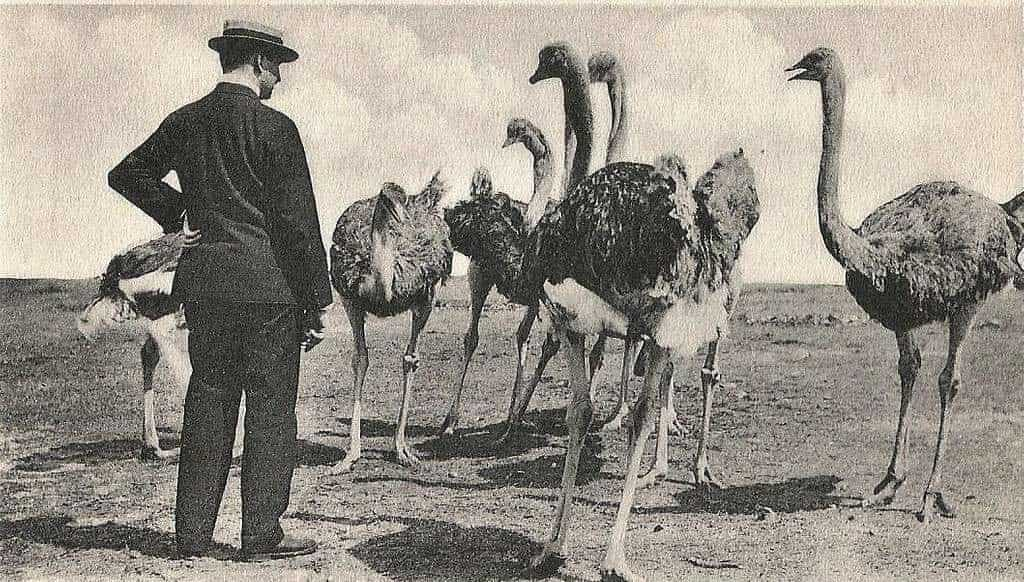
The year was 1932, quite a memorable year in history. The Brits arrested Mahatma Gandhi in India, and Hitler finally got his German citizenship. The first known antiparticle, the positron, was also discovered and photographed by American physicist Carl David Anderson in this year. But what was perhaps one of the year’s biggest highlights did not begin till early November, in the western parts of Australia.
Until 1932, the Emu birds had never been viewed as a pest; in fact, they are even featured on the Australian coat of arms alongside the kangaroo. So what caused this dramatic change in the reputation of the birds?
As with all good stories, let us go back to the beginning. You see, Australia, like many other nations at that time, was still reeling from the effects of World War 1. So, they decided to strike a deal with the returning war-weary veterans. In return for their services, the government would either sell or lease land in the western parts of the nation to them, so that they could set up their own farms in those lands.
Of course, like most good things in life, it came with a catch. Australia had actually been sitting on 24 million acres of land and was hoping these returning soldiers would cultivate this land. Except, of course, the land itself was extremely barren, and no one wanted to buy it. Not to mention, out of approximately 800 Aboriginal men who served, only 3 had their applications approved under this new scheme, a deeply disturbing fact, especially considering that a large part of these lands were in fact stolen from the Aboriginal reserves.
At this point in history, the world was also going through the Great Depression. So, farmers were encouraged to produce more wheat crops as they were a major Australian export, with the government even promising to assist the farmers with subsidies, which they never ended up giving to them. This enraged the farmers so much that they were ready to burn whatever wheat they had harvested that year just because they didn’t want the government to profit from it. But what had the emus got to do with all this, you ask? Well, these wheat fields just happened to be like an all-you-can-eat buffet for them. A seemingly never-ending source of food and a constant supply of fresh water made it the perfect place for these birds to migrate to.
Unfortunately, to the farmers, the emus were like six-foot-tall screeching delinquents plundering their fields, petrifying their herds, and leaving huge gaping holes in the fence to let rabbits and other small critters come into the farms, to do even more damage. And now 20,000 loud and ravenous emus had set their sights on the wheat fields of Campion and were ready to pillage. Nothing could stop them, no law or force of nature. The emus, with their muscular bodies and 6-inch long talons set forth with their sole goal being to survive and feed themselves. At an average speed of almost 49 kilometers per hour, there weren’t very many things a farmer could do himself to stop these pillaging pirates. The birds, of course, had a field day, eating their fill and then enjoying themselves by trampling on the remaining crops or pooping on them.
The farmers had had enough by 1923. They saw these birds as nothing but pests and demanded that the government deal with them as soon as possible. The Australian government subsidized bounties for anyone bringing an emu head back home, but this scheme was not enough to deal with the might of 20,000 emus all at once. The farmers tried to scare these birds by using whatever lousy firepower they had at hand, yet it still wasn’t enough. But these were no ordinary farmers; they were all ex-army forces, and so they knew, or at least they thought they knew, what was going to finally bring an end to this national emergency.
The Lewis Gun was a light machine gun, shooting up to 550 rounds per minute with an effective range of around 750 metres. It was one of the heights of modern warfare technology at that time, and incidentally, also the best bird-killing machine that the Aussies could think of and that money could buy. And so with iron in their resolve, the farmers formed a coalition and made a direct appeal to the Minister of Defence, George Pearce.
Now Pearce here, who was also a senator for Western Australia, already had many things to worry about, such as the growing unrest in Western Australia and their demands for independence from the rest of the continent. But now, he was presented with the perfect opportunity; all he had to do was produce some big, shiny guns, and not only would he have the support of all the local farmers, but he could perhaps even earn more money from them. And although Pearce was unsure if machine guns were the right call for some light bird-hunting activities, as long as he could put on a grand show and make a name for himself, he was ready to do all that the farmers pleaded him to do. Now, of course, he didn’t want to spend a lot of money on this operation, so he came up with a plan. Two guns would be provided to the farmers, but they would be operated by soldiers of the Royal Australian Artillery. The state would cover the cost for the transport of said soldiers, but the farmers would have to accommodate them and feed them. This was but a small price for the farmers to pay in exchange for getting rid of their winged mortal enemies, so they gladly agreed to pay it. And so under the command of Major Gwynydd Meredith, the farmers were provided with 2 Lewis Guns and 10,000 rounds of ammunition, along with Sergeant McMurry, O’Halloran and of course, a cinematographer to document this historic battle. I mean, this was a battle-hardened military that had fought and won a World War; what were a mere 20,000 flightless birds going to do against these grizzled old sweats?
And so on the fateful day, General Meredith and his men arrived at the wheat fields of Campion ready to be the heroes of the day. The farmers clinked their glasses in ecstasy, convinced that this was the day when the long tyrannical rule of the emus would finally come to an end. The General had a rather simple but effective plan; herd the emus all together and then shoot at them viciously, killing them all at once with ease.
He had to do this as the Lewis guns, though powerful, were also heavy and highly cumbersome to carry around. Meredith and the farmers set forth and began to implement this, except, of course, they couldn’t because the emus simply didn’t adhere to their logic. You see the emus as they were being threatened, decided not to huddle together for protection but to split into smaller groups and make a run for it, at a terrifying wheat-flattening rate of almost fifty kilometres per hour.
But of course, our valiant heroes still didn’t break a sweat. After all these guns were made to shoot in the toughest of wars at the fastest of aircrafts in the sky, a mere bird the size of a telephone booth could never beat them. Even the camera was excited, as this all but added to the thrill of this historical documentary. And although over the next few days these men did take down some emus, it did nothing to the morale of the bird army as they continued to feast on their never-ending buffet. So once again, General Meredith came up with a new plan; this time, he planned to ambush the birds at a nearby water reservoir and kill at least a couple hundred birds.
When the time came though, as luck would have it, the darned machine gun jammed and wouldn’t work. It took some time, but after recovering from the technical difficulties, the soldiers took aim and shot vigorously at the birds and waited for the dust to settle down so that they could see the results of their grim harvest. But lo and behold, only about a dozen birds had been killed. The rest, some slightly wounded, and some shielded by their iron-like feather coats, had set off running into the horizon away from our heroes.
The soldiers couldn’t believe their eyes. General Meredith had famously quoted:
“If we had a military division with the bullet-carrying capacity of these birds, it would face any army in the world … They can face machine guns with the invulnerability of tanks ”.
Now the farmers stepped in and gave some useful input.How about we shoot them straight in the head? That had to be a sure-shot killing method. And so everyone immediately discarded the ambush and piled the guns onto trucks and set forth behind the emus, once again shooting in a frenzy. But once again, they were too late and too slow as the emus had split into smaller groups again. Strangely, these birds seemed to be a bit too clever, as if they already had a strategy planned, almost as though they had a commanding leader. And that’s when our heroes made a startling tactical discovery; the emus had what could only be called a commander and a chief of intelligence. In every pack, there was a big, black bloomed bird who would stand tall and stay guard and warn the rest whenever the enemies came near.
Unfortunately, before they could work further with this information, our soldiers were ordered back to home base as the parliament was divided on the utility of this mission. Most claimed it to be excessive and unnecessary, so the Minister of Defense had no choice but to call back the troops. This would have been devastating news for the farmers except that now, they had a convert amongst them. Our dear General Meredith had seen blood. He had been emasculated by mere birds, and that of course could never sit right with him. He persuaded his senior by saying that one could never understand the true power of these birds by sitting behind a desk. These were invulnerable machines of destruction, poised to bring Australia to the brink of agricultural catastrophe.
And so a second attempt was given the green light by the government, and the General once again set forth, this time with the determination to drown the wheat fields in emu blood. On the first day back, Meredith had killed 40 emus, a shockingly high number compared to the previous records. As the days passed, he started to kill around 100 birds per week. On December 10th, 1932, the mission was declared to be a success and Meredith and his troop returned as heroes of a brutal war, claiming to have killed over 900 emus and injured around 2500 more.
But for a battalion of 20,000 winged soldiers, these numbers were but only a slight dent in an otherwise pristine and very feathered record of their survival. The Minister of Defense later came to be known as the Minister of Emu War, due to this historic incident. No one really won anything in this war. George Pearce didn’t win the hearts of the westerners; in fact, he was voted out of his position as the Senator once he failed to act on the further pleas of the farmers. Our heroes, General Meredith and Co., may have found momentary satisfaction in the death of 980 emus at their hands, but they surely never did get to stain the desert in emu blood as they had hoped to. The farmers continue to suffer under the rule of a tyrannical feathered beast and an incompetent human government. Soon, Campion and its neighbouring towns were also abandoned, and as of today, they are nothing but ghost towns.
The only true winners were the emus. To this day, they still roam those lands and feast on whatever they can find. Fences fell, and farms were forgotten, but the feathered kings continued to rule over those lands. Their plumage may have greyed now, and their feet may not be as swift as before, but their reputation as the avian tyrants who had treated the Australian government’s warnings like a mild suggestion never faded.