
The Commodification of Sports
Rangana Guha
FY B.Sc. 2025-29
Estimated Reading time: 4-5 mins
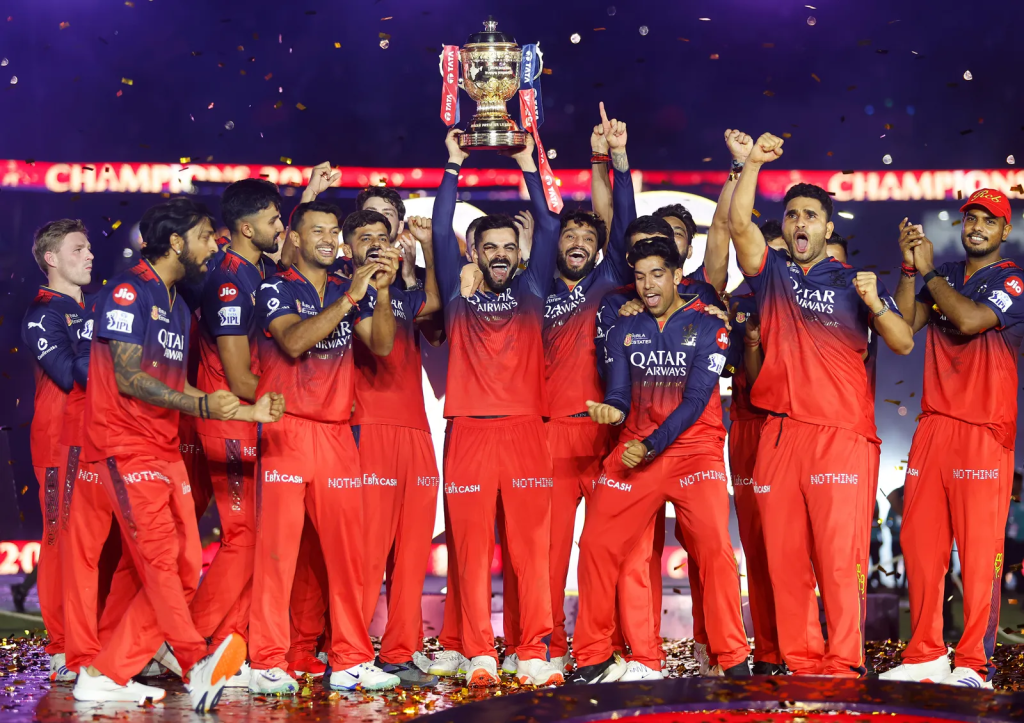
It’s all about the money. From the cashed cheques on the logo-plastered jerseys, to the incessantly high-budget advertisements, to the astronomical sums of money exchanged for a player’s talent, all they care about is the money. The commodification of global sports is a stark reality that reiterates to us that everything we love, the raw competition of sport, the shared joy, and the heart-wrenching defeats, has been systematically transformed into a commercial product. Every aspect of the athletic endeavor has been linked to something to be bought, sold, traded, and relentlessly monetized.
This commercialization is fundamentally powered by the media, which dictates how the sport is broadcast, and more importantly, how it’s played. Broadcast rights are sold for billions, which means the game itself isn’t just played, it’s scheduled, interrupted, and manipulated for the TV. For example, the FIFA World Cup 2022 generated a record $7.5 billion in revenue through sponsorship deals and broadcasting rights. The IPL secured a $6.2 billion broadcasting deal with Star Sports for 2023-2027. Consequently, match schedules are crammed and manipulated to maximise viewership, often at the cost of athletes’ well-being.
We see it with the ‘media timeouts’ in the NFL and ‘strategic timeouts’ in the IPL; these breaks aren’t for athletes, they’re for advertisers. My game stops so that someone can sell me the third variant of the same phone, compromising the integrity of the game for guaranteed ad revenue.
Media houses also create powerful narratives around the athletes themselves, packaging them as marketable heroes and villains, underdogs and subjugators. The focus shifts from the purely competitive nature and reality of the sport to a tailored, highly emotional storyline. This narrative construction is also what gives rise to a content monoculture. Since immense financial resources and media power back elite leagues, it is ensured that they dominate the global narrative. Smaller, local or traditional sports struggle for attention and funding whilst the world increasingly feeds a monoculture of content around a few major global mega sports, marginalising cultural sporting diversity.
By extension, this monetization seems to integrate into the live experience and the identity of the fan itself.
Going to a match used to be for everyone. Now, local clubs are often part of global corporate empires, creating profit-driven leagues that threaten the traditional sentiment and structure of the sport. A notable example would be the proposal of launching the European Super League in 2021, which basically guaranteed fixed revenue streams for elite, well-established clubs regardless of their performance . It sought to establish a financial cartel by making founding members permanent participants who couldn’t be relegated, regardless of on-field performance, eliminating the competitive risk inherent in qualification and assuring elite clubs continuous access to massive, guaranteed broadcasting revenue. The proposal later collapsed as a result of backlash from the general public as well as UEFA and FIFA, but the incident still stands as a precedent to the greed for money distorting the integrity of sports.
Furthermore, the stadium experience too has become tiered. Posh corporate hospitality boxes cater to the wealthy elite, while the seats once filled by passionate fans grow increasingly expensive, transforming what was once a communal gathering into a premium, exclusive product. Everywhere we look, every visible surface- jerseys, stadium names, interview backdrops- is plastered with corporate logos. These sponsorship arrangements merge the emotional capital of our sport with commercial objectives of multinational corporations. And then comes the merchandise, most popularly in the form of a jersey. Owning one has become identical to being a fan of a certain team. Fandom is no longer just about belief- it’s about buying. Our identities as fans are now linked to market forces, almost an expression of loyalty through purchase.
This relentless pursuit of profit inevitably hurts the very spirit of the game. The drive for money tempts everyone, which can be observed from the manipulation of rules and match fixing fueled by global betting. This constant commercial pressure on players often overrides their mental and physical health.
Another disturbing implication of commodifying sports is the conception of a massive financial ecosystem that operates like a vacuum. The copious amounts of wealth concentrated in global mega sports like IPL and elite football take up nearly all the available sponsorship, top-tier media attention, and vital infrastructure investment. This directly impacts the development of less popular sports. Excellence in fields like traditional Indian games or emerging Olympic disciplines is deemed financially invisible. Reports show that cricket consistently commands around 85% of all sports sponsorship spending in India, leaving the collective “emerging sports” to contend for the remaining 15%. This is also of great detriment to our talent pool, as young, promising athletes, recognising the lack of viable career paths, abandon promising Olympic or traditional sports for commercial stability in the dominant field. Without the massive TV contracts or corporate sponsorships, these sports cannot afford quality coaching, dedicated infrastructure, or sustainable professional salaries, creating an unfair atmosphere where talent outside of the monoculture struggles to survive. The financial viability of one sport comes at the expense of the health and viability of several others.
The journey through the examination of the commodification of sport reveals a harsh truth: our most cherished games now operate under the singular logic of the market. Every aspect of the experience- from the player’s contract to the stadium seat- is subjected to an exchange value, leveraged against our emotional loyalty as fans. This has resulted in the alienation of the local fan and has contributed to the systemic marginalisation of cultural sporting diversity due to skewed funding and unequal reception. The tragedy of modern sport is that the value of the game is no longer found in the playing field, but in the balance sheet.
Article goes hard sudeep🗣🗣🗣🗣