
If talent, hard work, and dedication are not enough, then what else?
Radha Jadhav
FY BSc Economics 2025-29
Estimated Reading time: 4 mins
Sports are not just about sweat and tears, because certain paths and opportunities seem laid out for specific people. Have you ever questioned why only certain people appear on the front page of specific sports? Well, others make it to the cover page too, but their magazines lie in the dusty corner of the attic. There is so much more to what determines a person’s success in sports, besides talent: access to quality training, family support, and, if the sport you’re talented in makes headlines in your country or not. Your talent needs an audience to perform for.
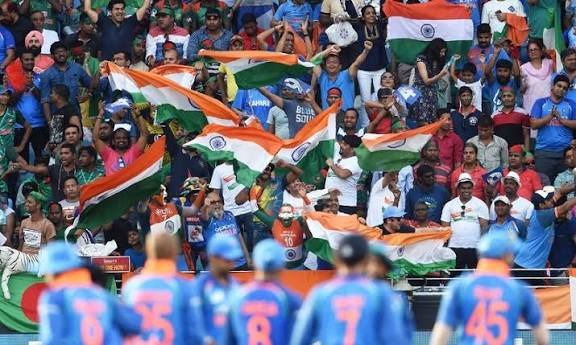
For example, compare two countries: India and Brazil. India is passionate about cricket and has a huge fan base, whereas Brazil is not. A talented cricketer born in Rio de Janeiro does not make headlines like a person with similar talent born in Delhi. And the case is reversed if the sport is football instead. Talent can be universal, but the luck tied to your sport is deeply rooted in geography.
Focusing on the sports situation in India, around 90% of our population does not earn an adequate income to spend on non-essential items. The high costs of training, equipment, travel, and diet make pursuing sports a burden on such households. A lot of times, such families prefer their children to focus on education as it ensures stability and livelihood. This group of the population gets filtered out before even making it to the competitive stadiums. While the truly inspirational stories of athletes overcoming financial constraints to become stars exist, they are also driven by exceptional talent and luck.
More layers of filtration occur as various sports have different significance across countries. A person having a high skill set in an underrated sport of that country is at a natural disadvantage: low media coverage, a smaller audience, and potentially a lower income, unlike someone with a similar degree of skill set in a popular sport, who receives recognition, higher media coverage, and audience support. The cultural value of a sport has the ability to change the trajectory of his life.
In our country, India’s top players in two different fields live realities with huge contrast – Srihari Natraj in swimming and Virat Kohli in cricket. Srihari Natraj had a three-national record run at last year’s Jakarta Asian Games, finishing sixth and seventh in two events, and also had two national marks at the Commonwealth Games, making him one of the finest swimmers of our country. Virat Kohli has been the only player ranked #1 in all three formats, winning multiple ICC awards (Cricketer of the Year 2017, 2018), leading India to the 2011 ODI World Cup and 2024 T20 World Cup.
Despite impressive achievements, Natraj’s parents weren’t keen on sending their child to the senior World Championships in South Korea due to financial constraints. Srihari Natraj received government support of ₹50,000, and all his other expenses were covered under the TOP (Target Olympic Podium) Scheme for eight months till the Asian Games, but now he has been receiving only ₹10,000 under the Khelo India Scheme. Virat Kohli’s highest IPL salary is 15 crore/ year, supplemented by his BCCI contract of 7 crore/year. Their vastly different lifestyles reflect systemic inequality rather than differences in dedication or effort.

A major setback that India has is its lower government support in comparison to countries like the USA or China, which thrive in sports. India’s poor Olympic accomplishments stand in stark contrast to their incredible cricket success. The absence of competitive advantage in sports other than cricket is sometimes attributed to the model of sports governance and financial issues. The Indian government spends far less on international events, which makes the athletes rely on private sponsors for purchases. Furthermore, India lacks the latest equipment facilities and good training infrastructure. The facilities are mostly available in metropolitan cities, which comprise only 36-37% of the population.
Mehboob Shamsher Khan was the first-ever Indian Olympian swimmer and finished in fifth place in the Melbourne Summer Olympics. Despite being a national hero, Khan lived in utter poverty, where his Indian army pension was his only source of income. Khan set a national record in the 200m butterfly in 1954 and broke all records at the national meet in Bangalore in 1955. He earned the slot in the Olympic squad with sheer performance, which he repeated in Melbourne. Even with his achievements, the Indian government paid only for his airfare to Melbourne. Khan claimed that he had to take a loan of ₹300 to meet food requirements. Which was cut from his monthly income of ₹56 after his return from the Olympics. He was neither given enough recognition nor financial support.

I acknowledge that to reach a high level in cricket is extraordinarily challenging, being the most viewed and highly competitive sport. This article does not intend to undermine the efforts of athletes in popular sports. But the current system for sports in our country does not allow every sport to flourish, which withholds the immense talent within our society. As the audience, media, and institutions, we must support diverse sports. The coverage and attention each sport receives is in our hands. Government policies must develop methods to ensure all sportsmen can live comfortably. The state governments have been taking proactive measures to develop sports infrastructure in our country. Haryana spent over 1.8 crores on infrastructure for the Khelo India Youth Games of 2022. Odisha constructed 89 multi-purpose indoor stadiums in urban areas by January 2023 for Hockey world cups. Such initiatives immensely benefit our sporting environment and athletes. Our athletes deserve fair opportunities to infrastructure, visibility and funding. India’s sporting system succeeds when we stop becoming a one- sport nation. A true sporting environment thrives where opportunities are as widespread as talent.